Typing and Storytelling: A Winning Combination for Homeschoolers
Last Updated : May 29, 2026
Typing practice does not have to feel repetitive or boring. One of the best ways homeschool students can build keyboarding skills is through storytelling. Combining typing with creative writing connects motor skills with imagination, helping students improve both their typing speed and their confidence as writers.
When students focus less on finding keys and more on expressing ideas, creativity begins to flow naturally. Strong keyboarding skills allow learners to write without interruption, helping thoughts move smoothly from mind to screen. Instead of stopping to search for letters, students can stay focused on characters, ideas, and storytelling details.
Fast typing also supports stronger thinking and creativity. When students can type without constantly looking for keys, they are better able to stay in a creative flow state. Their hands can keep pace with their thoughts, making it less likely they will lose ideas or interrupt their writing momentum.
As keyboarding becomes automatic, students reduce the mental energy spent on the physical act of typing. This lowers cognitive load and allows them to focus more on storytelling, word choice, organization, and building strong ideas. Instead of concentrating on where each letter is located, they can focus on expressing themselves clearly and creatively.
Storytelling also turns typing practice into something meaningful. Rather than completing random drills, students can type stories they care about, science notes, history reflections, spelling lists, or creative journal entries. This makes practice more engaging and helps improve words per minute, accuracy, and overall fluency without the tedium of traditional exercises.
Faster typing also helps students produce rough drafts more efficiently. The sooner ideas are written down, the sooner students can begin revising, editing, and improving their work. These skills can benefit learners far beyond homeschool education. In future careers such as journalism, content creation, marketing, and communications, strong typing skills can help individuals manage deadlines, increase productivity, and communicate effectively in fast paced environments.
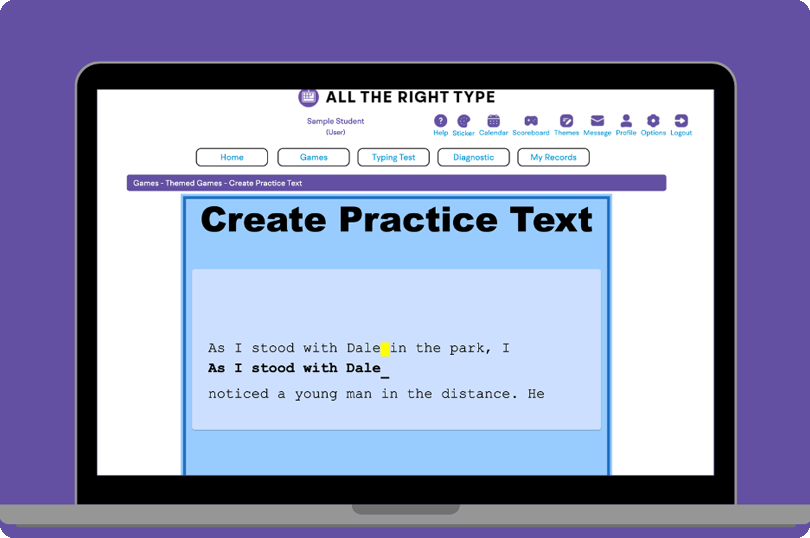
With ALL THE RIGHT TYPE, students have the power to create their own practice content under their personal login. They can type their own stories, spelling work, or classroom notes, then use those same pieces to run timed typing tests. Students can even print out their completed work, giving them a sense of accomplishment and ownership over their learning.
Storytelling offers benefits beyond typing speed. It helps students strengthen language skills, organize thoughts clearly, and build communication confidence. Whether used in language arts, history, or science lessons, storytelling encourages learners to create detailed narratives, develop unique characters, and explain ideas in a meaningful way.
Reading stories aloud or sharing written work can also improve public speaking confidence and empathy. As students imagine different perspectives and experiences, they become stronger communicators and more thoughtful learners.
For homeschool families, combining typing with storytelling creates a learning experience that is both practical and creative. Students are not only building lifelong keyboarding skills, they are also discovering their voice as writers and thinkers. When typing becomes a tool for creativity instead of just practice, learning becomes more enjoyable, productive, and memorable.
Fast typing also supports stronger thinking and creativity. When students can type without constantly looking for keys, they are better able to stay in a creative flow state. Their hands can keep pace with their thoughts, making it less likely they will lose ideas or interrupt their writing momentum.
As keyboarding becomes automatic, students reduce the mental energy spent on the physical act of typing. This lowers cognitive load and allows them to focus more on storytelling, word choice, organization, and building strong ideas. Instead of concentrating on where each letter is located, they can focus on expressing themselves clearly and creatively.
Storytelling also turns typing practice into something meaningful. Rather than completing random drills, students can type stories they care about, science notes, history reflections, spelling lists, or creative journal entries. This makes practice more engaging and helps improve words per minute, accuracy, and overall fluency without the tedium of traditional exercises.
Faster typing also helps students produce rough drafts more efficiently. The sooner ideas are written down, the sooner students can begin revising, editing, and improving their work. These skills can benefit learners far beyond homeschool education. In future careers such as journalism, content creation, marketing, and communications, strong typing skills can help individuals manage deadlines, increase productivity, and communicate effectively in fast paced environments.
With ALL THE RIGHT TYPE, students have the power to create their own practice content under their personal login. They can type their own stories, spelling work, or classroom notes, then use those same pieces to run timed typing tests. Students can even print out their completed work, giving them a sense of accomplishment and ownership over their learning.
Storytelling offers benefits beyond typing speed. It helps students strengthen language skills, organize thoughts clearly, and build communication confidence. Whether used in language arts, history, or science lessons, storytelling encourages learners to create detailed narratives, develop unique characters, and explain ideas in a meaningful way.
Reading stories aloud or sharing written work can also improve public speaking confidence and empathy. As students imagine different perspectives and experiences, they become stronger communicators and more thoughtful learners.
For homeschool families, combining typing with storytelling creates a learning experience that is both practical and creative. Students are not only building lifelong keyboarding skills, they are also discovering their voice as writers and thinkers. When typing becomes a tool for creativity instead of just practice, learning becomes more enjoyable, productive, and memorable.